Studio practice
What a piece of cloth remembers.
Cloth, gesture and a page of unfinished notes can hold different kinds of knowledge. Together, they make a richer record of a practice.
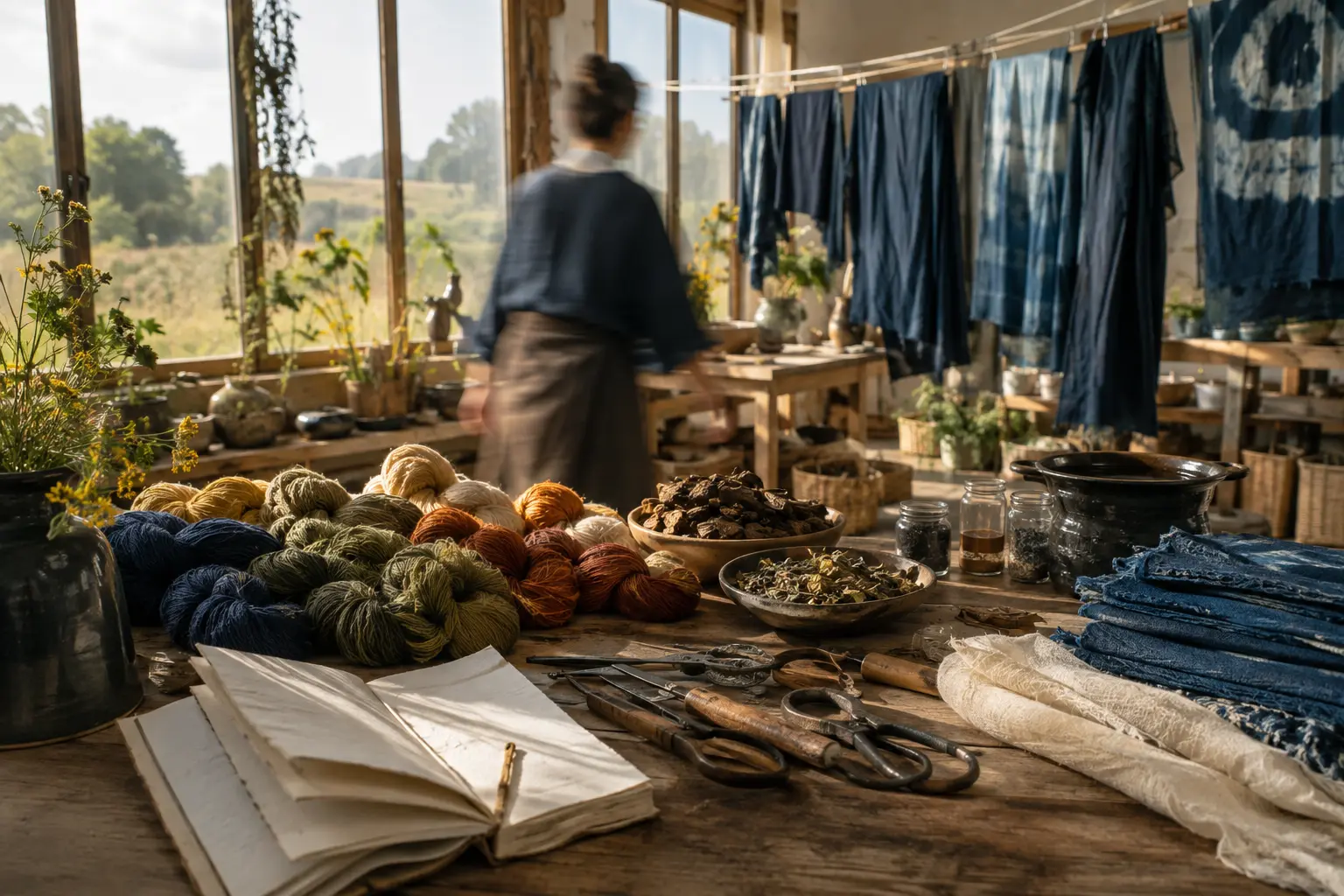
What belongs in an archive of a material practice? A finished object is an obvious beginning. A photograph and a written description might follow. But a process also leaves less tidy traces: the rhythm of a repeated gesture, an unexpected stain, a question spoken while working.
These traces hold information that a final report can miss. They tell us how a material behaved, how a decision felt and how one person learned from another. Making room for them changes an archive from a collection of outcomes into a place where a practice can continue to be understood.
Cloth as a record
A sample of dyed cloth can show more than a color. Uneven edges may reveal how it was folded or held. A sequence of swatches can make variation visible. Notes attached to each piece can connect an appearance to a plant, a date or a particular question.
The aim is not to explain away every difference. Sometimes the most useful record is one that preserves uncertainty. Writing down what is unknown gives another person permission to investigate, rather than treating the sample as a recipe that must be reproduced.
Remembering through movement
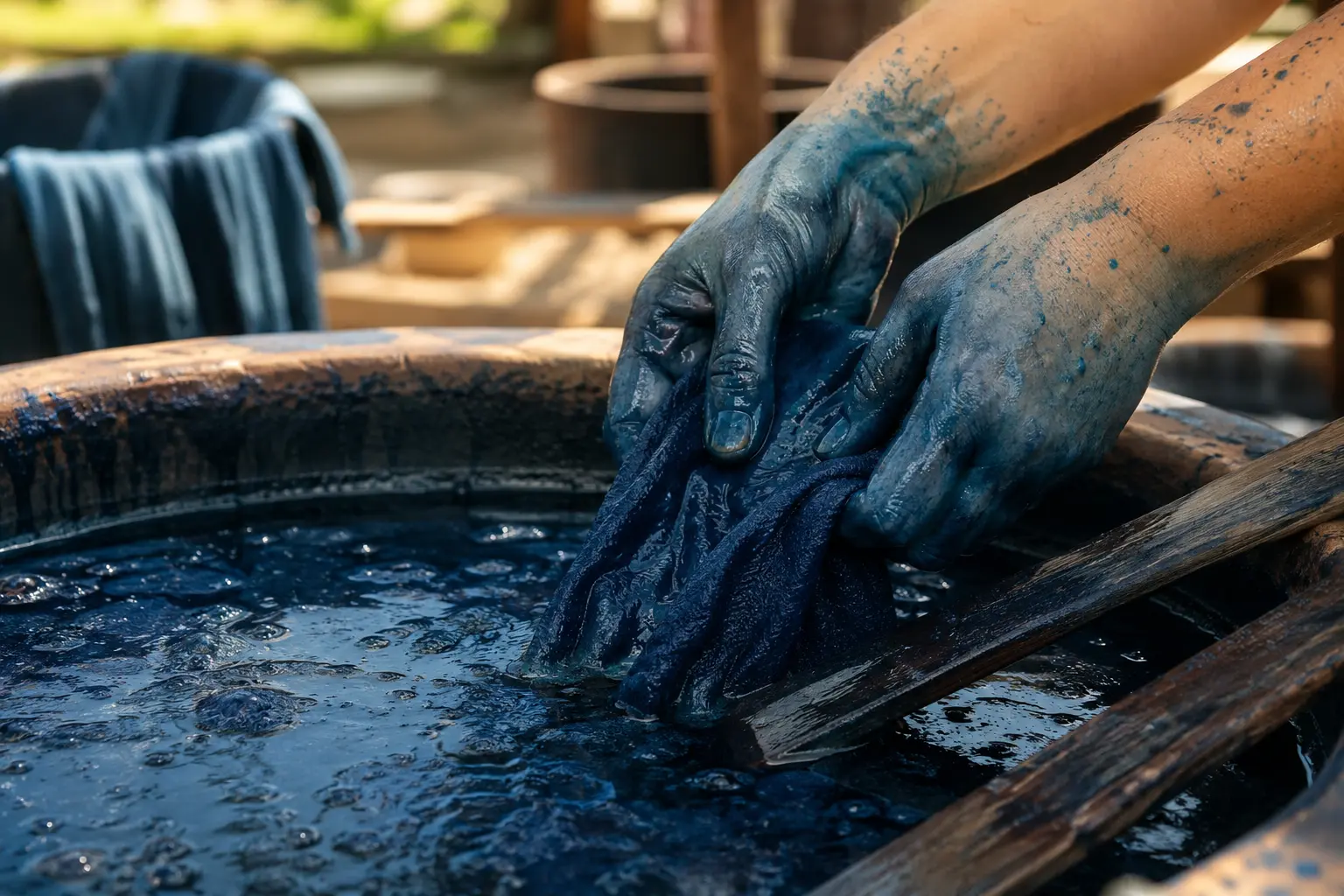
Some knowledge is easier to demonstrate than to describe. The angle of a wrist, the way a length of cloth is supported, the pause before the next movement: these can be difficult to translate into instructions. A short moving image or a shared demonstration offers another way to remember.
Documentation should be made with the people it represents. Ask how a gesture or a conversation may be recorded and shared. Agree on credit and context. A record is more useful when its relationship to the people who made it remains visible.
Keep the archive open to return
An archive needs opportunities to be revisited. Lay out older samples beside new ones. Read a note after a season has passed. Invite someone who was not present to ask what the record leaves unclear. These encounters can become part of the documentation too.
The archive can move because the practice moves. It can travel through cloth, conversation, film and the body, gathering new questions along the way. Its value is not only in preserving what happened, but in making another thoughtful encounter possible.