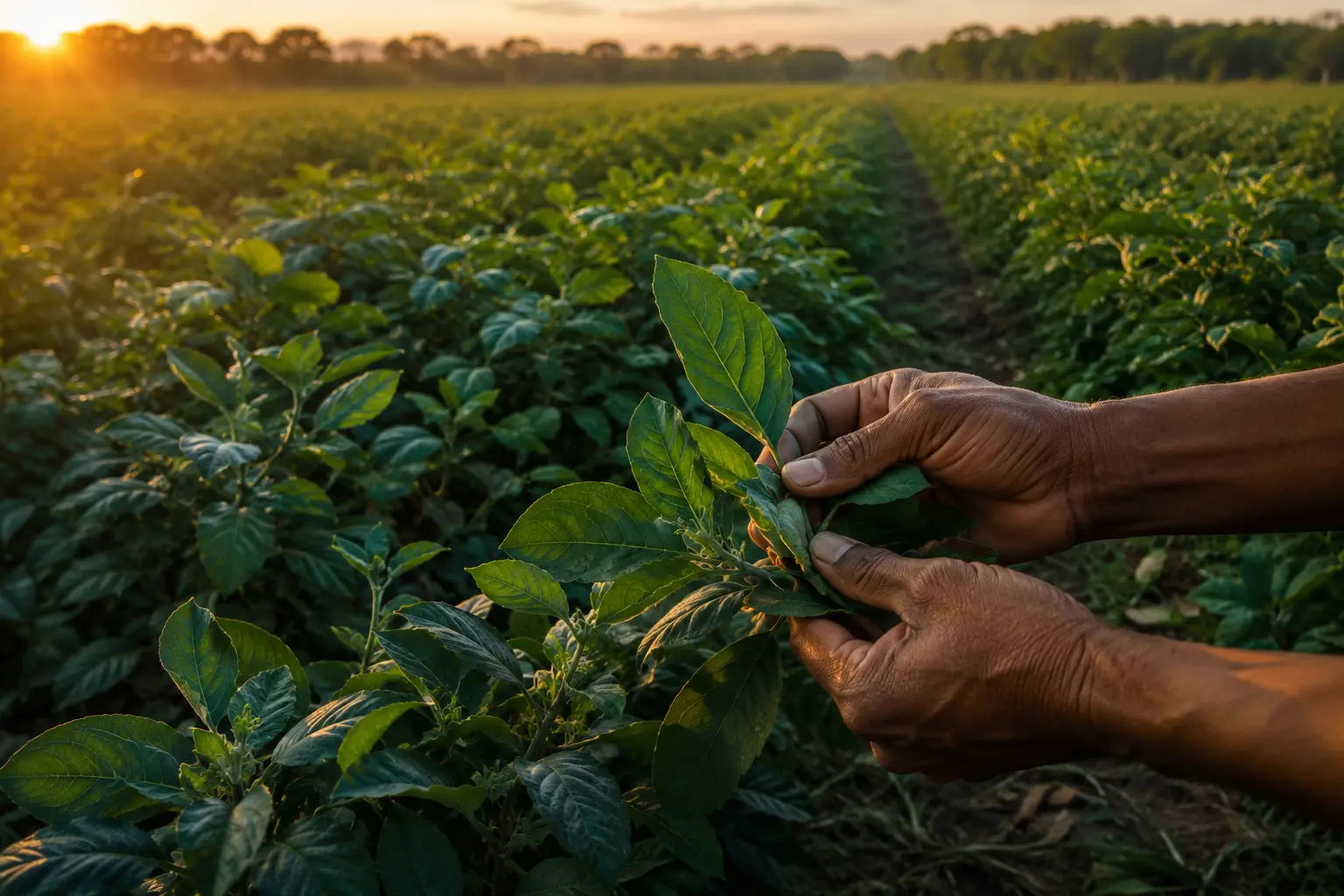
Plant · pigment · relationship
The journey to indigo is never only about blue.
It is about soil and weather, hands and timing, history and responsibility—the full ecology behind a color.
Holding the whole story
A crop with beauty, utility and a history that cannot be separated from forced labor.
Indigo shaped the Lowcountry economy through the expertise and stolen labor of enslaved people. Working with the plant here requires more than celebrating a color; it requires truth, gratitude and attention to who is remembered, resourced and heard.
Our practice stays with that complexity. We learn from local knowledge, make process visible and use contemporary cultivation as a place for reflection, repair and new forms of relationship.
A seasonal cycle
Blue begins long before the vat.
Each phase changes what is possible in the next. There are no shortcuts around observation and care.
- 01
Seed & soil
Variety, soil health, weather and local conditions shape the entire season.
- 02
Grow & tend
Regular attention builds familiarity with the plant and the ecosystem around it.
- 03
Harvest & gather
Timing, hands and shared labor bring the crop into its next form.
- 04
Transform & settle
Leaves move through a carefully observed process to become stable pigment.
- 05
Dye & document
Fiber, cloth and records carry the color—and the learning—forward.
Learning by doing
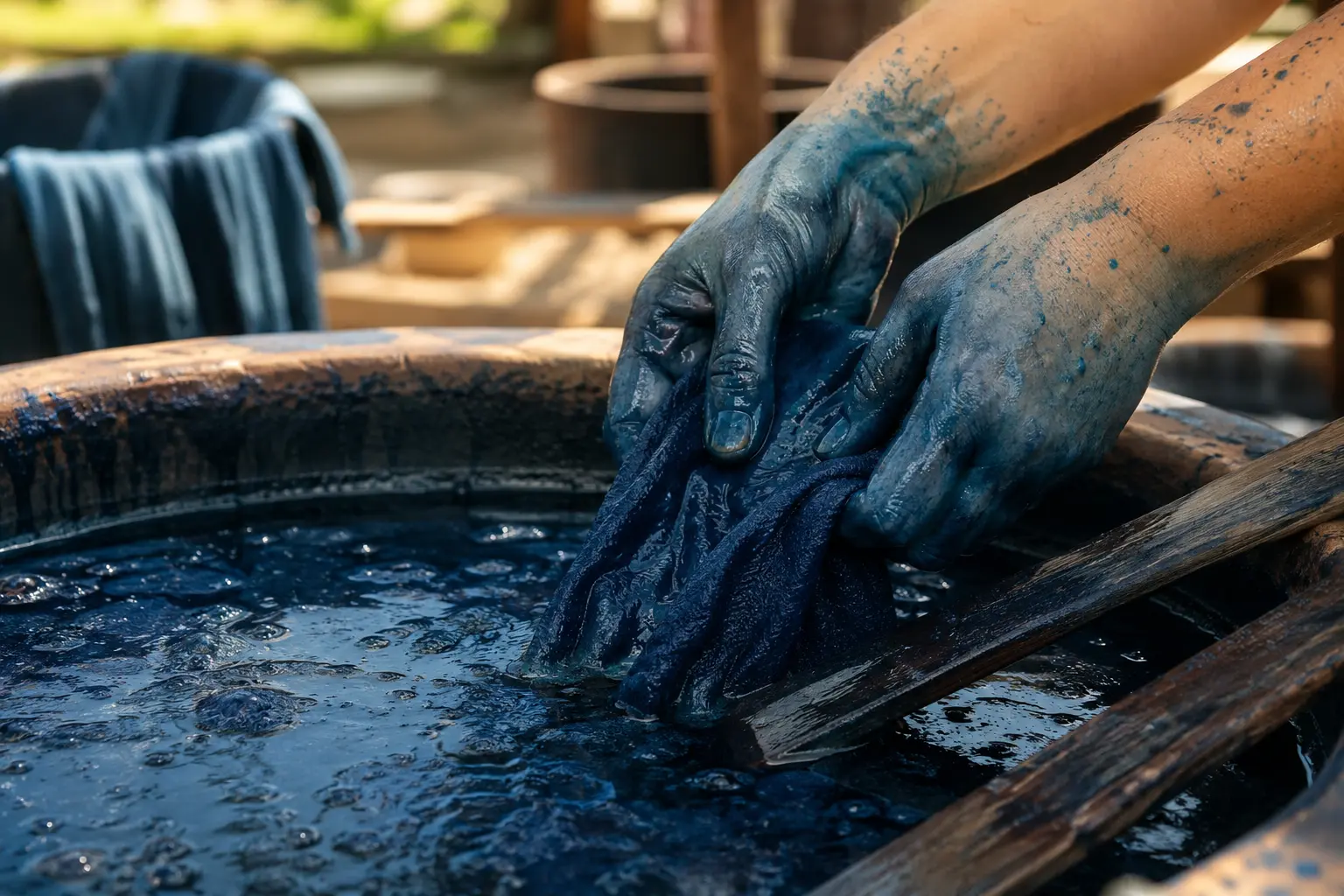
Processing is a collective skill.
Mobile equipment, shared field days and clear documentation can make small-scale processing more accessible while keeping knowledge connected to people and place.
Ask about a field dayEntering the work
Start with context, then find the hands-on path.
Our resource library offers orientation for growers, artists, educators and project partners who want to approach natural color thoughtfully.