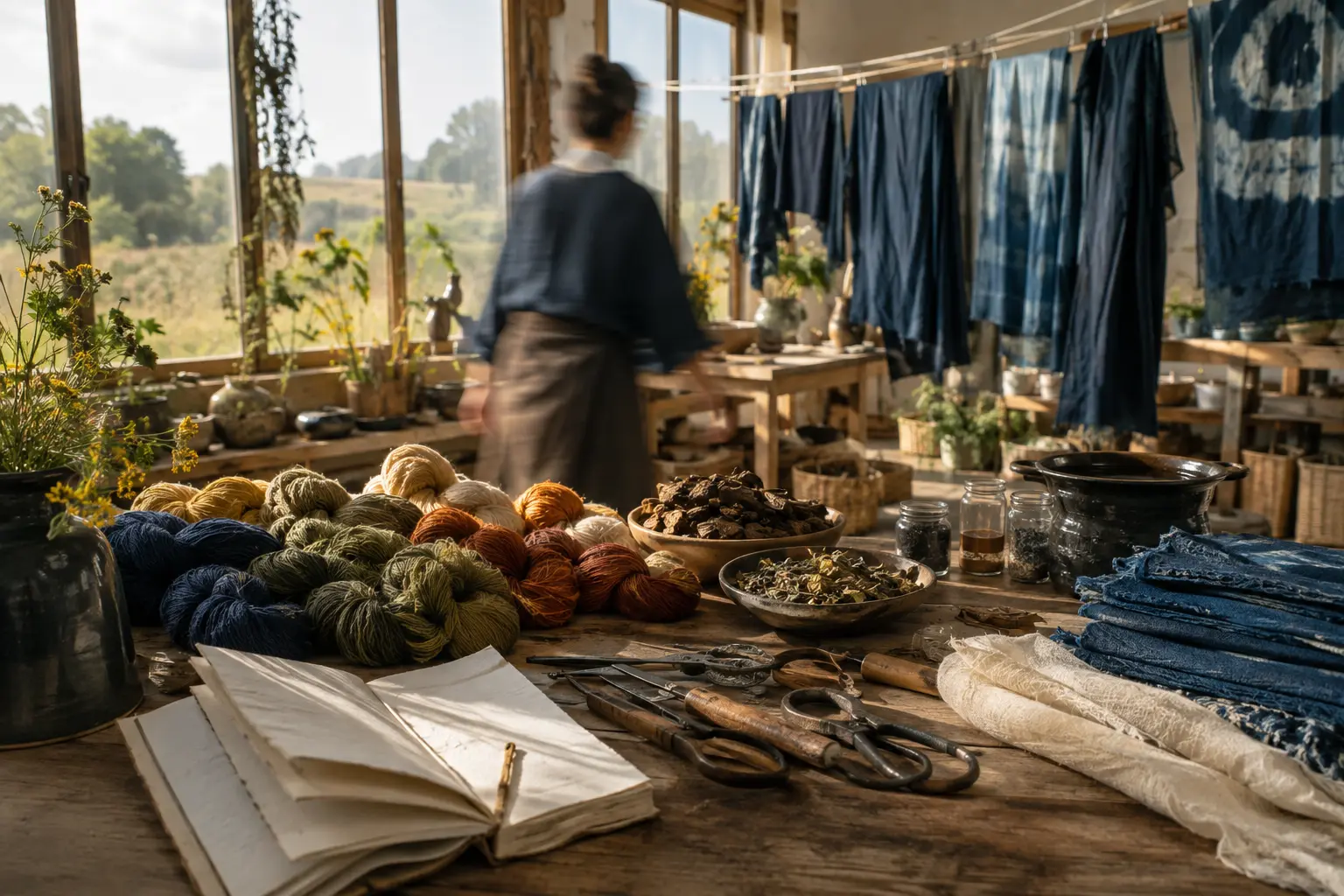
In the field
Before the blue, a field of green.
A field asks us to pay attention. To the plant, to the season, and to the people working beside us. Indigo offers a way to practice all three.
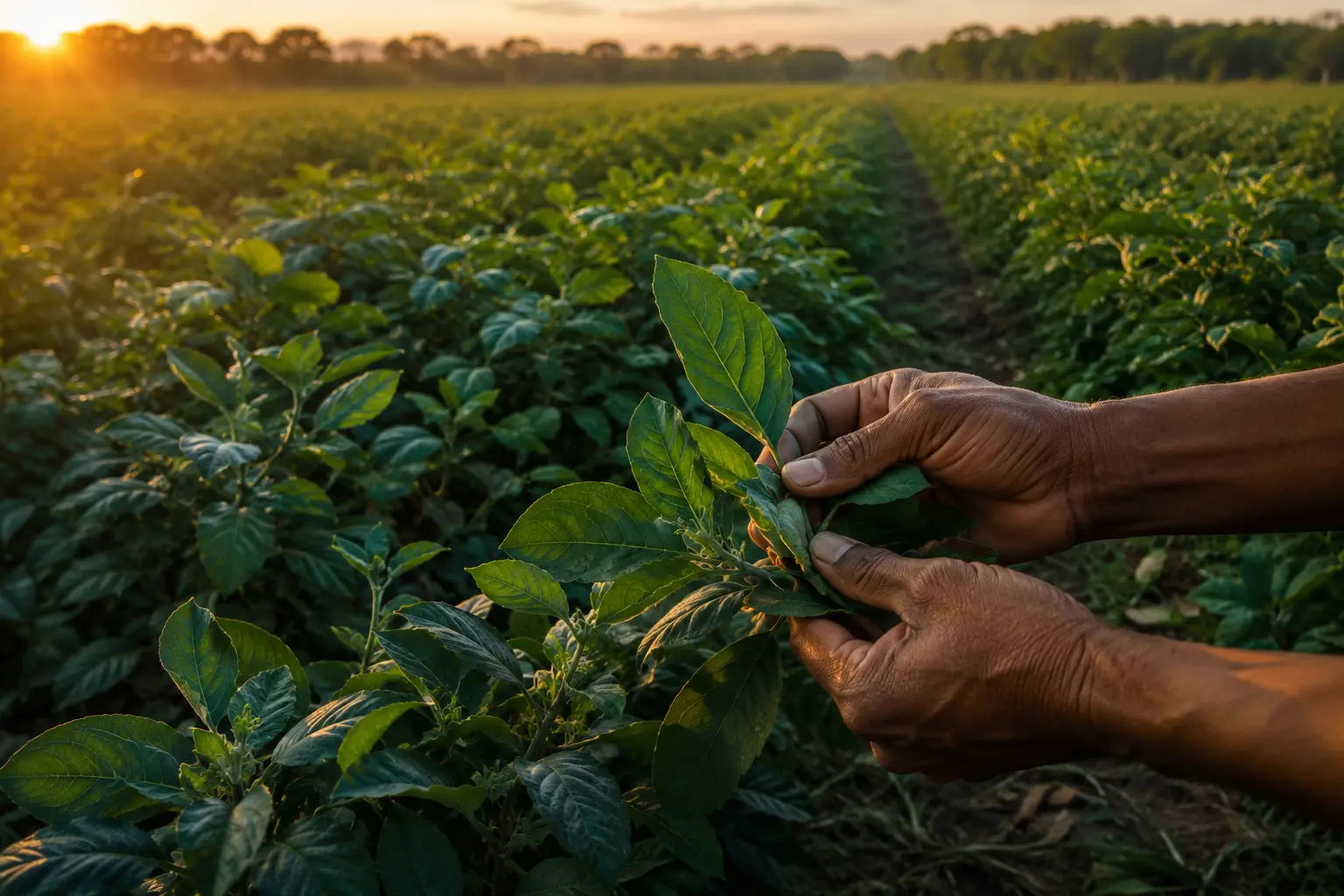
Before a piece of cloth becomes blue, there is a plant. Before there is a pigment, there are decisions about soil, water, weather and time. Following indigo back to the field changes the way we look at color: it becomes a relationship rather than a finished thing.
Harvesting invites a particular kind of attention. A hand reaches, pauses and gathers. Another person moves through the next row. The task repeats, but the conditions keep changing. Light shifts across the leaves. A basket gets heavier. The body finds a pace it can sustain.
Learning through repetition
There is knowledge in these small movements. How much to carry. When to change position. How to make space for someone approaching from the other direction. None of this is separate from the work of growing and processing a plant. It is part of what makes the work possible.
Thinking of a harvest as choreography does not mean turning it into a performance for an audience. It means recognizing the arrangements already present: bodies in space, shared timing, gestures that are learned by watching and doing. A field can be a place of study without becoming a classroom.
A color with a context
Plant color carries the conditions of its making. The species grown, the timing of a harvest and the way leaves are processed all influence what follows. Keeping notes makes those relationships easier to notice, while leaving room for what cannot be repeated exactly.
A useful field note can begin simply. Record the date and the weather. Describe the plant rather than only naming it. Notice what felt easy and what asked more of the body. Include questions alongside observations. The unfinished parts often give the next visit its direction.
Making room for many hands
Shared work also asks practical questions. Are tools within reach? Is there somewhere to rest? Can a newcomer understand the task without having to guess? Paying attention to these details helps turn participation into a meaningful exchange.
The blue that eventually appears on cloth is one part of this story. The rest remains in the field, in the notes and in the ways people learn to work together. Following those threads is a practice of its own.